
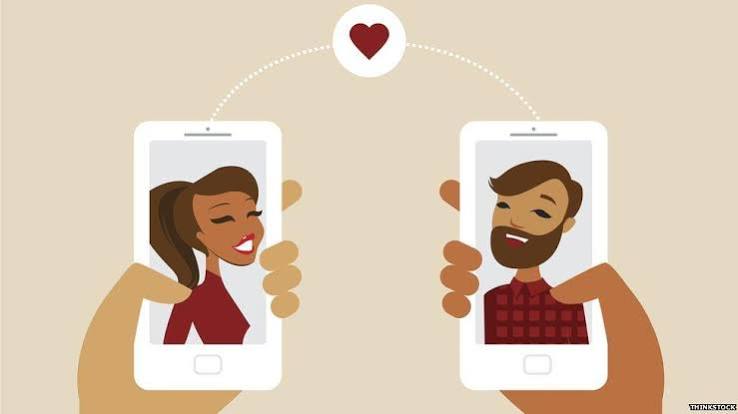
It’s a Match!
Digital match-making solutions have done greater than just alter just how we discover our best press; they’re transforming the essential nature of our social networks.
According to a set of scientists exploring on-line dating, the method we’re seeking love (and lust) is connecting areas in completely unique means, breaking down borders and possibly also creating stronger long-term partnerships.
It had not been all that long ago that most relationships would begin with a smile and a handshake, instead of a click or a swipe.
That began to transform in the mid-1990s, when websites like Match.com combined traditional lonely-heart classifieds with the comfort of the net.
Today there’s a wide variety of sites and applications to suit your preferences, way of living, sexuality, and spending plan, from Tinder and Bumble for a fast swipe to like, to OKCupid and eHarmony for those who desire their wit to reveal with their words.
Any type of preconception over online dating has slowly evaporated over the years. 15 percent of Americans admit to having actually utilized online dating, and 5 percent of those who are married or committed long-term relationships stating they fulfilled their spouse online.you can find more here pixelpusher.us/ from Our Articles
Love in the Digital Age
Not just has digital modern technology made dating less complicated for charming hopefuls, the data gathered by such websites has actually been an advantage for scientists curious concerning human mating behaviors.
But it’s clear that the electronic revolution hasn’t only been shaped by the human cravings for sex and companionship; it’s transformed the method we develop relationships.
Economists Josue Ortega from the College of Essex and Philipp Hergovich from the University of Vienna wanted to know just how the surge of electronic match-making has influenced the nature of culture.
Culture can be modelled as an internet of interlinked nodes, where individuals are the node and the web link explains how well they recognize one another.
The majority of people are securely connected with regarding a hundred nodes, including friends and household, and loosely connected with others.
We can map pathways via connections to all pertain to Kevin Bacon– or almost any other figure on the earth– in remarkably couple of actions.
“Those weak connections work as bridges in between our team of friends and various other gathered groups, permitting us to link to the worldwide area,” Ortega and Hergovich told MIT Modern technology Evaluation.
Also just a couple of decades ago most brand-new connections were just a jump or 2 away inside an existing network. A bar, a sporting team, church, or university would usually give the excellent setting for those very first hot stimulates.
None more.
For heterosexual couples, on the internet dating has risen to 2nd location– simply below ‘met with friends’– as the context for that first intro. Among homosexual couples, electronic match-making has escalated.
And the ripple effect is extensive.
“Individuals that meet on the internet tend to be complete unfamiliar people,” claim the scientists.
Regarding networks go, this resembles building new freeways in between communities, as opposed to taking the regional backroads. Simply a couple of arbitrary brand-new courses between various node towns can entirely alter just how a network functions.
Take interracial connections, for instance, long held to be an action of the basic social distances within a population.
Once prohibited in lots of states, and lengthy taboo, marital relationship in between different ethnic groups in the United States has gradually gotten on the increase because the mid-20th century.
The boost steepened at the turn of the 21st century in line with the increase in on-line dating, and afterwards even better as swipe-to-match applications like Tinder went mainstream around 2014 (it launched in late 2012).
While there are likely a selection of influences, the network changes arising from on the internet dating fits the observations perfectly.
“Our design predicts virtually full racial integration upon the emergence of on the internet dating, even if the number of partners that individuals fulfill from freshly developed connections is little,” claim Ortega and Hergovich.
Marital relationships on-line were likewise forecasted by the version to be much more durable and less most likely to end in divorce, a hypothesis which is sustained by a research study performed in 2013.
The research is currently offered online on the pre-publish web site arxiv.com, so it has actually not finished its full peer-review process right now.
It can often appear as if the on the internet globe enhances our echo chambers and leads us to end up being more insular, particularly when it involves social media sites.
It’s nice to have some proof that the relationships we make online are likewise breaking down boundaries and creating more powerful connections.
No responses yet